
Brow Lift or Eyelid Surgery? How to Tell Which One Fixes Hooded Eyes
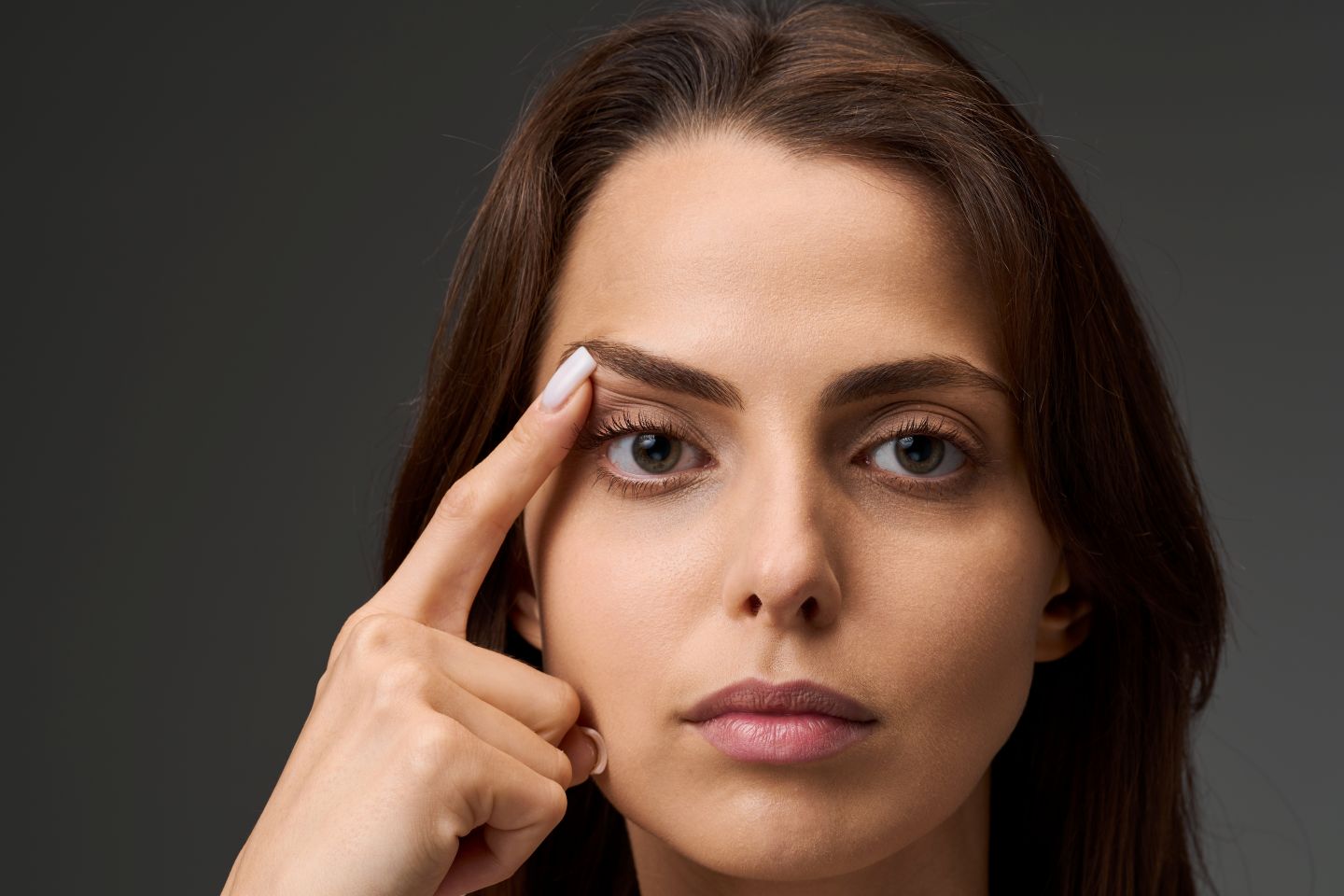
Brow lift or eyelid surgery? How to tell which one fixes hooded eyes comes down to a single question: where is the extra skin coming from? Hooded eyelids can be caused by sagging eyebrows that push skin down onto the lid, by excess skin on the upper eyelid itself, or by both at once. The procedure that works is the one that treats the actual source, and choosing the wrong one can leave the result looking unfinished.
Two Sources of the Same Heavy Look
As the forehead ages, the brow can slowly descend from its natural position. When it does, it crowds skin onto the upper lid and creates hooding, even if the eyelid has very little excess skin of its own. In other patients the brow sits where it always has, and the heaviness comes from the eyelid, which has developed extra skin and sometimes extra fat. Many people have a mix of the two, which is why an exam matters more than a guess.
The Fingertip Test You Can Try in a Mirror
Stand in front of a mirror, relax your forehead, and gently lift the outer part of one eyebrow with a fingertip to where it sat when you were younger. If most of the hooding disappears, a low brow is likely a big part of the picture. If the extra skin is still sitting on your lid, the eyelid itself is likely the main contributor. This is only a starting point, and it cannot replace an in-person evaluation, but it will help you ask better questions at your consultation.
When the Brow Is the Culprit
A brow lift, also called a forehead lift, repositions the tissues of the brow and upper face and trims away excess skin. It can soften frown lines and the “11s” between the brows while opening up the eyes. Dr. DiFrancesco chooses among three techniques: an open, or coronal, brow lift with an incision within the hairline; an endoscopic brow lift that uses a small camera and smaller incisions hidden in the scalp; and a limited incision, or temporal, brow lift that lifts the outer brow through a small incision in the temporal hair.
The surgery usually takes about two hours under general anesthesia. Expect to take a week or so away from work and social plans, with swelling that can last two to four weeks. Keeping your head elevated while you sleep and avoiding exercise are part of the aftercare. You can see examples in the brow lift before and after gallery.
When the Lid Is the Culprit
Eyelid surgery, or blepharoplasty, removes or repositions excess skin, fat, or muscle from the upper or lower eyelids. On the upper lid, the incision sits in the natural eyelid crease so the scar is hidden. Dr. DiFrancesco decides how much skin and fat to remove for a natural look, and patients with existing dry eyes have less skin removed so the dryness does not get worse.
Blepharoplasty can be done as outpatient surgery under local anesthesia with light sedation or under general anesthesia, and upper eyelid surgery typically takes one and a half to three hours depending on the extent of the work. Bruising and swelling usually subside within about two weeks, and most patients return to normal activities after about ten days. Sleeping on your back with the head of the bed raised helps. The eyelid surgery gallery shows what healed results look like.
Doing Both in One Operation
If your exam shows a low brow and heavy lids, treating only one can leave you halfway there. The temporal brow lift is often performed at the same time as an upper eyelid lift to contour the brow and lid together, and a full brow lift can also be paired with eyelid surgery for a more alert, awake look. Combining them means one surgery and one recovery period.
Why Botox Is Not the Answer for a Drooping Lid
Botox can do a lot for lines on the forehead, but it cannot lift droopy eyelids and may actually make them worse. Some patients with a true eyelid droop, called ptosis, unconsciously raise their brows all day to keep their lids open, which etches horizontal lines across the forehead. Relaxing those muscles with Botox can let the lid sag further. If you have tried injectables and your eyes still look heavy, that is a sign to have the lid itself evaluated.
Hooded Eye Questions From the Consultation Chair
Can hooded eyelids be fixed?
Yes. Hooded eyelids can be caused by sagging eyebrows or excess upper eyelid skin, and each cause has a surgical fix: a brow lift, eyelid surgery, or both together.
Can droopy eyelids affect my vision?
Yes. Droopy eyelids can block part of your vision, usually your peripheral vision, and it is often most noticeable at night.
Will a brow lift make my forehead smaller?
No. A brow lift does not change the size of your forehead.
Does eyelid surgery leave scars?
There are incisions, but they are placed carefully in the creases of the eyelids to hide the scars as much as possible.
Let a Mirror Exam Settle It
The fingertip test can point you in a direction, but only a hands-on exam of your brow position, eyelid skin, and eye health can confirm which procedure will give you the result you want. Schedule an eye and brow evaluation with Dr. DiFrancesco, or call us with any questions before you book.
Dr. Lisa DiFrancesco
Dr. Lisa DiFrancesco is a female board-certified plastic surgeon based in Atlanta, GA. Her specialties include, but are not limited to, body contouring after weight loss, skin tightening after weight loss, and abdominoplasty. She has won Castle Conolly Top Doctor for several years in a row, among other prestigious awards. Her expertise and experience makes her uniquely qualified to provide the utmost care and treatment for every patient.


