
The “Ozempic Breast” Phenomenon: How to Restore Your Curves After the Weight is Gone

For many of my patients, the journey with GLP-1 medications like Ozempic, Wegovy, or Mounjaro has been life-changing. Shedding significant weight is a massive achievement for your metabolic health. But it often comes with an unexpected side effect that patients mention to me in hushed tones during consultations: “Ozempic Breasts.”
You look in the mirror and see a body that is healthier, but breasts that feel deflated, hollow, or lower than they used to be.
First, I want you to know: This is completely normal.
When you lose weight rapidly—often 20 to 50 pounds in a matter of months—your skin cannot always retract fast enough to keep up with the volume loss. The breast tissue, which is largely composed of fat, shrinks, leaving behind an empty “envelope” of skin.
The good news? We can fix this. And more importantly, we can do it safely.
Why Does Rapid Weight Loss Affect the Breasts?
Unlike traditional diet and exercise, where weight loss is gradual, GLP-1 medications can cause rapid deceleration in body mass. This speed affects the Cooper’s ligaments—the internal structures that hold your breast tissue up. The combination of volume loss and relaxed ligaments leads to what we clinically call breast ptosis (sagging) and upper pole emptiness (loss of cleavage).
Your Surgical Options: It’s Not Just Implants
Restoring your breasts after weight loss isn’t a “one size fits all” procedure. Depending on your anatomy, we typically look at three pathways:
1. The Breast Lift (Mastopexy)
If you have enough natural breast tissue but it has simply “fallen,” a lift is the gold standard. We remove the excess skin and reshape your existing tissue to sit higher on the chest wall. This restores a perky, youthful profile without using a foreign body.
2. The “Lift & Fill” (Augmentation-Mastopexy)
If your breasts feel significantly “deflated” or hollow at the top, a lift alone might leave you with a smaller cup size than you desire. In these cases, we place a small implant to restore upper-pole fullness while simultaneously tightening the skin envelope.
3. Auto-Augmentation (The “Natural” Lift)
For some patients, we can use your own tissue—typically from the lower breast or lateral chest—to create an internal “implant” of living tissue. This creates fullness and projection using only your own body.
Critical Safety Update: Anesthesia and GLP-1s
This is the most important part of your consultation. Because drugs like Semaglutide and Tirzepatide work by delaying gastric emptying (keeping food in your stomach longer), they pose a unique risk during anesthesia.
To ensure your safety and prevent aspiration, our practice adheres to the latest 2025 American Society of Anesthesiologists (ASA) guidelines:
- The “Liquid Diet” Protocol: We may require you to be on a clear liquid diet for 24 hours before your surgery, rather than the traditional “nothing after midnight” rule.
- Medication Pausing: Depending on your dosage, we will advise you on exactly when to pause your last dose—typically 1 week prior to surgery—to ensure your stomach is empty and safe for anesthesia.
The Takeaway
Your weight loss success story deserves a happy ending. You don’t have to live with the “deflated” feeling that often follows significant weight loss. If you are ready to match your body contour to your new healthy lifestyle, let’s discuss your options.
Schedule your consultation with Dr DiFrancesco to hear more about your options
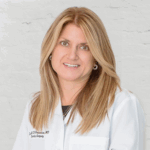
Dr. Lisa DiFrancesco
Dr. Lisa DiFrancesco is a female board-certified plastic surgeon based in Atlanta, GA. Her specialties include, but are not limited to, body contouring after weight loss, skin tightening after weight loss, and abdominoplasty. She has won Castle Conolly Top Doctor for several years in a row, among other prestigious awards. Her expertise and experience makes her uniquely qualified to provide the utmost care and treatment for every patient.


