
The Surgeon’s Secret Weapon: Why Nutraceuticals are Non-Negotiable for Your Recovery
Discover how pharmaceutical-grade supplements (nutraceuticals) reduce bruising, swelling, and scarring in plastic surgery patient.
Beyond the Scalpel: The Power of Nutraceuticals in Surgical Recovery
When patients sit in my office for a consultation—whether it’s for a facelift, a tummy tuck, or breast augmentation—the focus is usually on the “before and after.” But as a surgeon, my obsession is the “during.” Specifically, I’m obsessed with how your body’s internal chemistry handles the “controlled trauma” of surgery.
In recent years, we’ve moved beyond simple vitamins. We are now in the era of nutraceuticals: pharmaceutical-grade nutrients that do more than just prevent deficiency; they actively signal your cells to repair, reduce inflammation, and knit skin back together.
Why “Vitamins” Aren’t Enough
The term “nutraceutical” combines “nutrition” and “pharmaceutical.” These are highly bioavailable, concentrated compounds backed by clinical data. In plastic surgery, we use them to turn your body into a high-performance healing machine.
Phase 1: Pre-Op Preparation (The “Reservoir” Phase)
Two weeks before surgery, our goal is to build a nutritional reservoir. Surgery depletes your body’s stores of key minerals almost instantly.
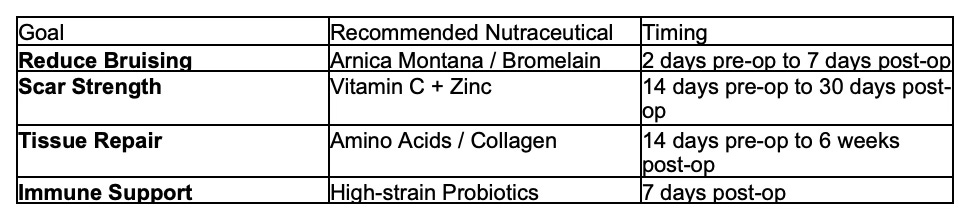
- Protein Loading: Amino acids are the literal bricks of your new tissue. I recommend increasing lean protein intake or high-quality collagen peptides.
- Vitamin C & Zinc: This duo is the “general contractor” of collagen synthesis. Without adequate Zinc, your wound healing can stall in the early stages.
- Vitamin A: Crucial for epithelialization (the growth of new skin over a wound).
Phase 2: Post-Op Recovery (The “Repair” Phase)
Once the surgery is over, the clock is ticking on inflammation.
- Bromelain & Arnica Montana: These are the gold standards for reducing bruising and edema (swelling). Bromelain, an enzyme found in pineapple, breaks down the proteins that trap fluids in the tissues.
- Probiotics: Surgery and post-op antibiotics can wreck your gut microbiome. A healthy gut is essential for a healthy immune response to prevent infection.
- Copper Peptides: These help cross-link collagen and elastin, ensuring your surgical scars are thin, flat, and strong.
The “Do Not Take” List (Safety First)
Note: It is just as important to know what to avoid. Many common supplements act as natural blood thinners, which can cause dangerous hematomas during or after surgery.
Stop these 14 days before surgery:
- Vitamin E & Fish Oil (Omega-3s)
- Garlic, Ginger, and Ginkgo Biloba
- St. John’s Wort
- Green Tea Extracts
The Surgeon’s Summary Table
Final Thoughts
Surgery is an investment in your confidence. Nutraceuticals are the insurance policy for that investment. By optimizing your biology, we aren’t just “healing”—we are perfecting the result.
Are you preparing for an upcoming procedure? Always consult with your surgical team before starting a new regimen, as dosages must be tailored to your specific medical history.
Schedule your consultation with Dr DiFrancesco to hear more about your options.

Dr. Lisa DiFrancesco
Dr. Lisa DiFrancesco is a female board-certified plastic surgeon based in Atlanta, GA. Her specialties include, but are not limited to, body contouring after weight loss, skin tightening after weight loss, and abdominoplasty. She has won Castle Conolly Top Doctor for several years in a row, among other prestigious awards. Her expertise and experience makes her uniquely qualified to provide the utmost care and treatment for every patient.


